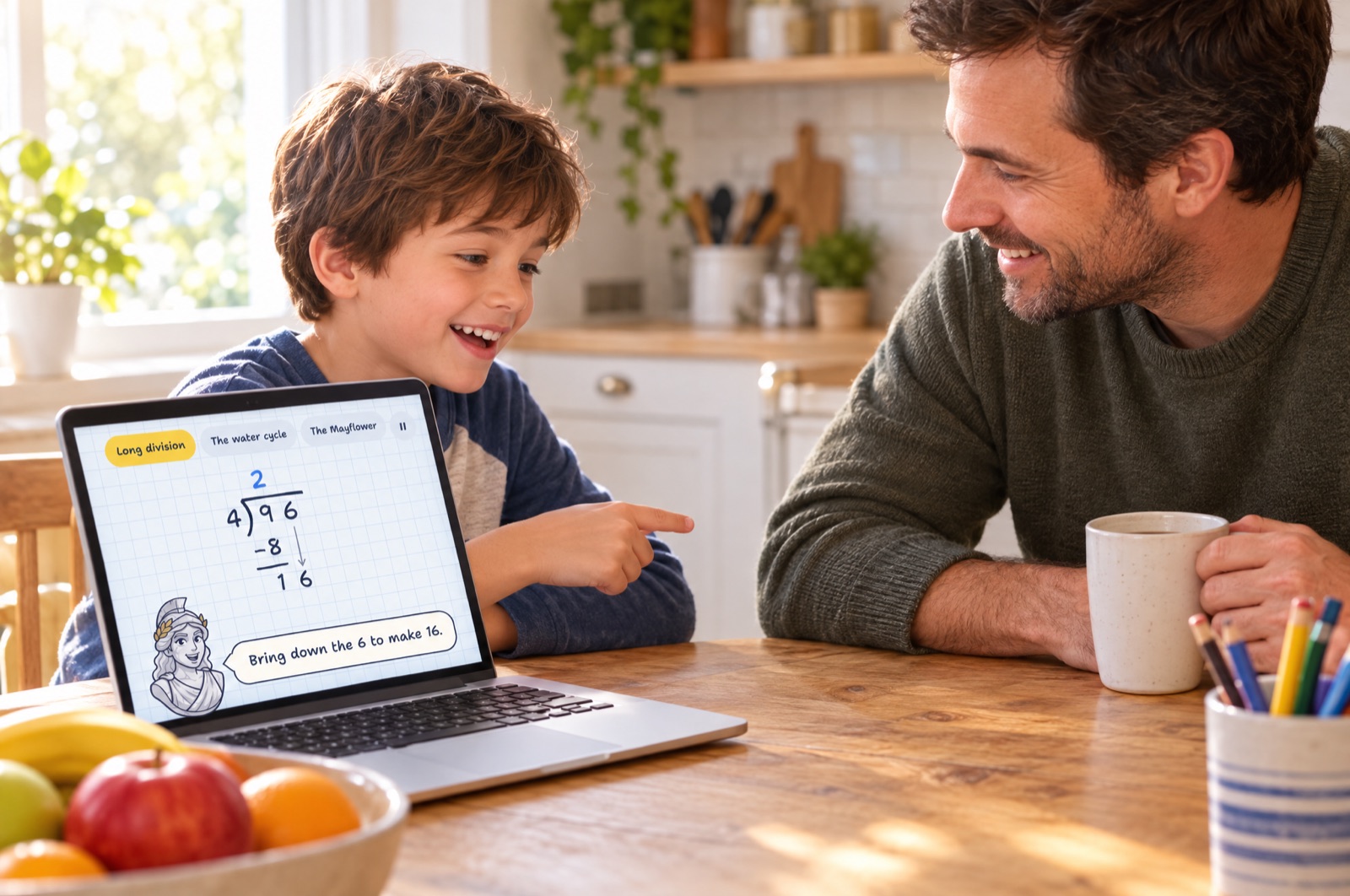
It's 6:30, dinner is on the stove, and your child is stuck on 96 ÷ 4. You know the answer. What you don't know is the way their teacher showed them on Tuesday, and "that's not how my teacher does it" ends the conversation.
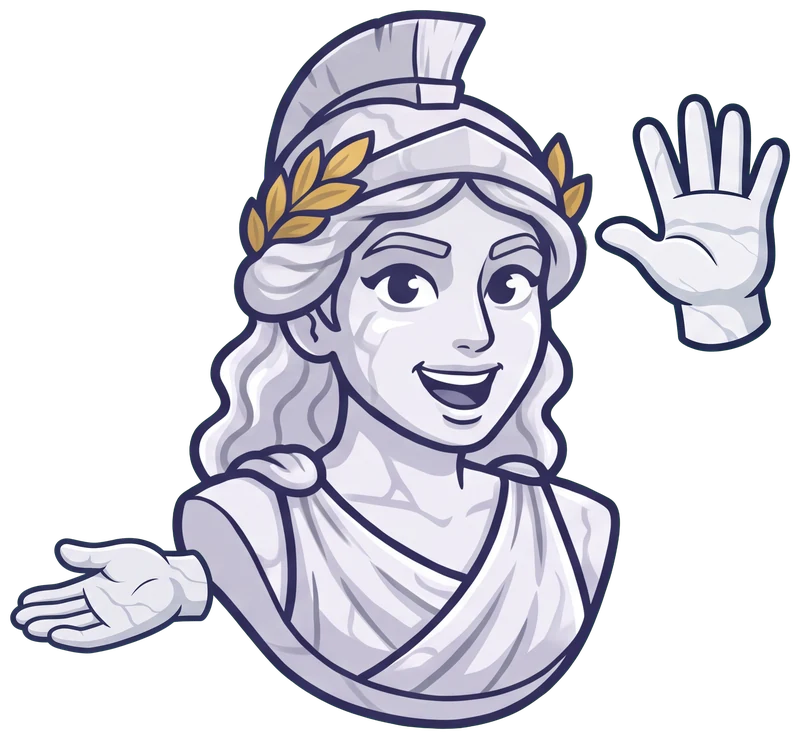
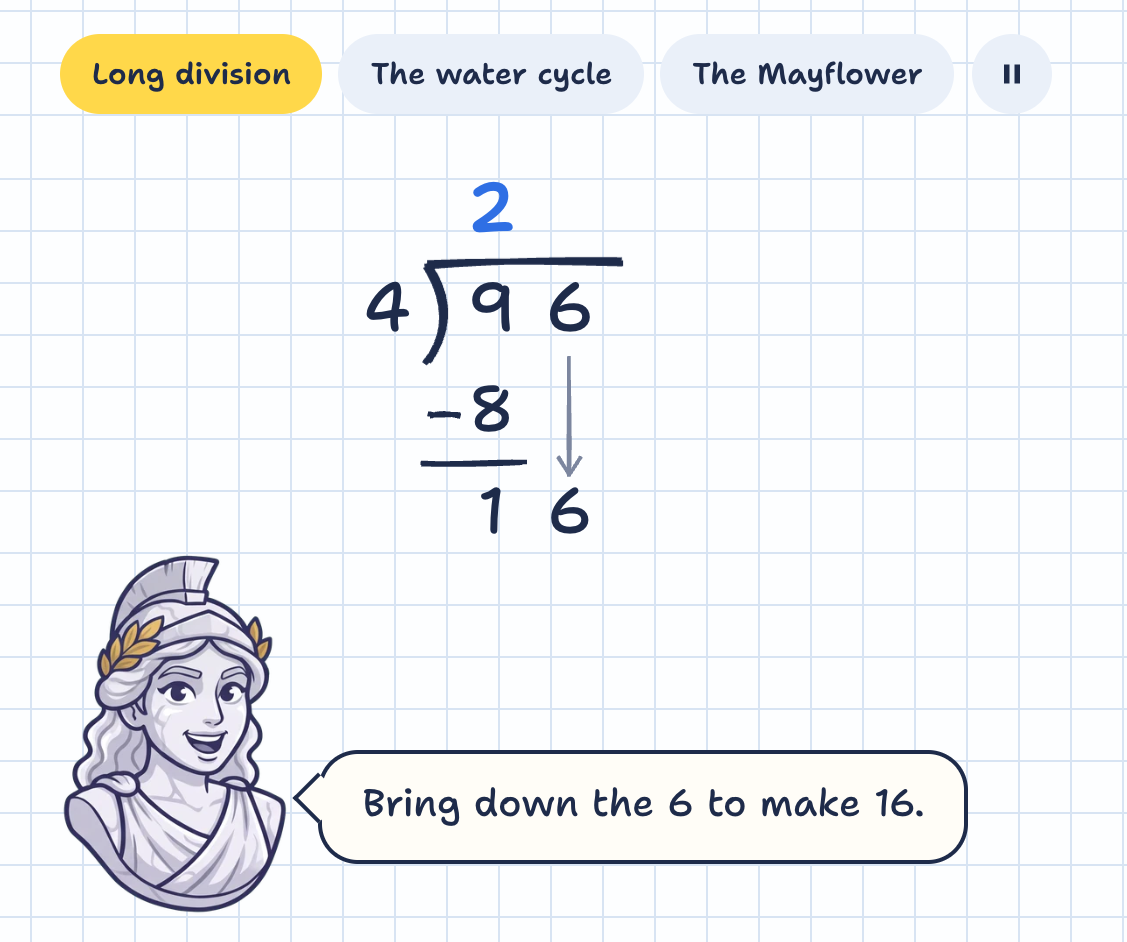
Thena was made for that moment. She's an AI teacher your child talks to on a laptop or iPad. She explains one step at a time and draws each step on her board as she says it, set out the way their school sets it out. When your child asks why, she explains it another way and draws it again, until it makes sense.
What a lesson looks like
Thena's board is a page of grid paper. When she says "carry the one", a small 1 appears in the next column. When she talks about fourths, a pizza appears in four slices for your child to shade. Clocks have hands that move as she tells time, history goes on a timeline, and money is real dollars and cents to count.
Your child answers out loud, by typing, or right on the board: tapping, coloring in and crossing out. Thena sees what they did, so a slip gets caught at the step where it happened.
They can stop her at any point and ask. A video or a worksheet can't answer back.
New ideas often start with a story. Thena reads a picture book aloud or tells a tale on the board, and the lesson grows out of it. The crow dropping pebbles into a pitcher becomes the pitcher they measure, and the three bears' bowls become the sizes they compare.
Taught the way their school teaches it
What your child learns at home should match the classroom, right down to how a problem is set out. Thena follows Common Core and NGSS from Pre-K to 10th grade, with phonics from letters and sounds to vowel teams. She teaches math, English, science and social studies, uses long division and the standard algorithms, and helps children get ready for state tests.
Each child has their own level in each subject. A short challenge game finds where they really are, gaps and all, so a child can do math two years ahead and read at their own pace. You can also set the level yourself.
Help, not answers
When about 1,000 students practiced math with a plain AI chatbot, they scored 48% higher in practice and 17% lower in the exam that followed (PNAS, 2025).
So Thena gives the least help that gets your child moving, and each wrong try opens one more step.
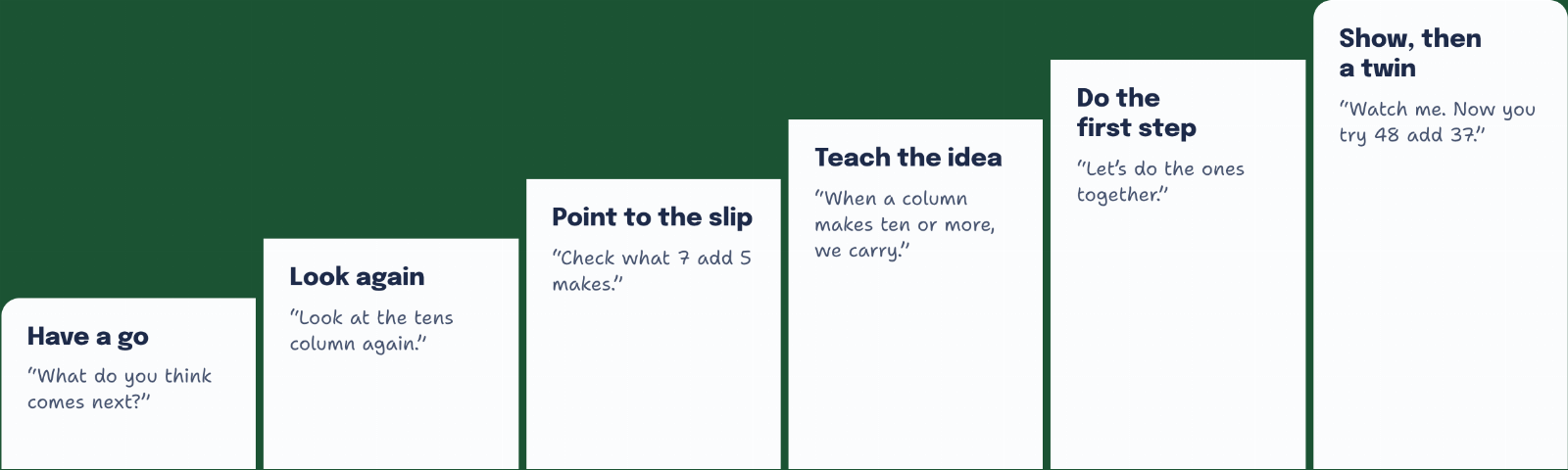
She starts with "What do you think comes next?" and only shows the way after a few tries. Then she gives a twin question to do alone, so the last answer is their own. A four-year-old is shown the way after two tries, a teenager after four.
Learning that sticks
Each topic comes back as a quick warm-up the next day, then three and seven days later, then at longer gaps. As your child grows more confident, Thena's help steps back and more of the work is their own.
Stars and badges are earned by working something out alone: a star for each step they solve themselves, a badge for getting it right after a wrong try, and progress toward the next one for warm-ups they still get right days later. Streaks, leaderboards, timers and things to buy are left out on purpose. The next lesson waits until your child asks for it.
You see every word
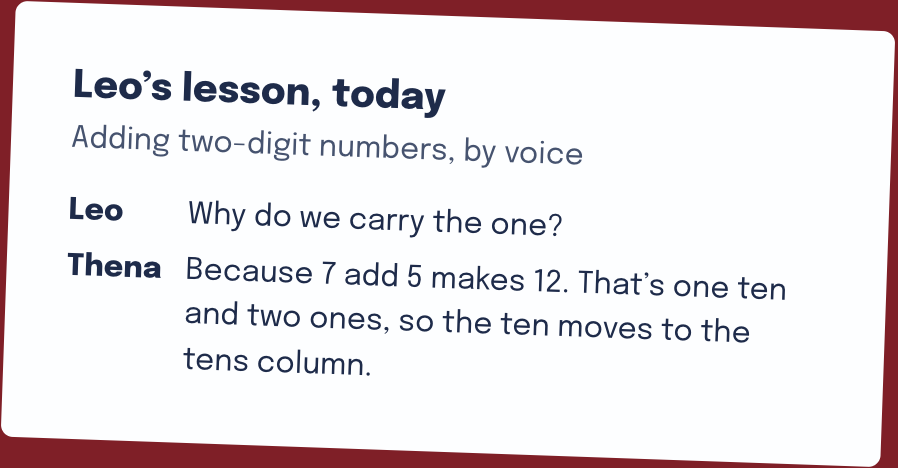
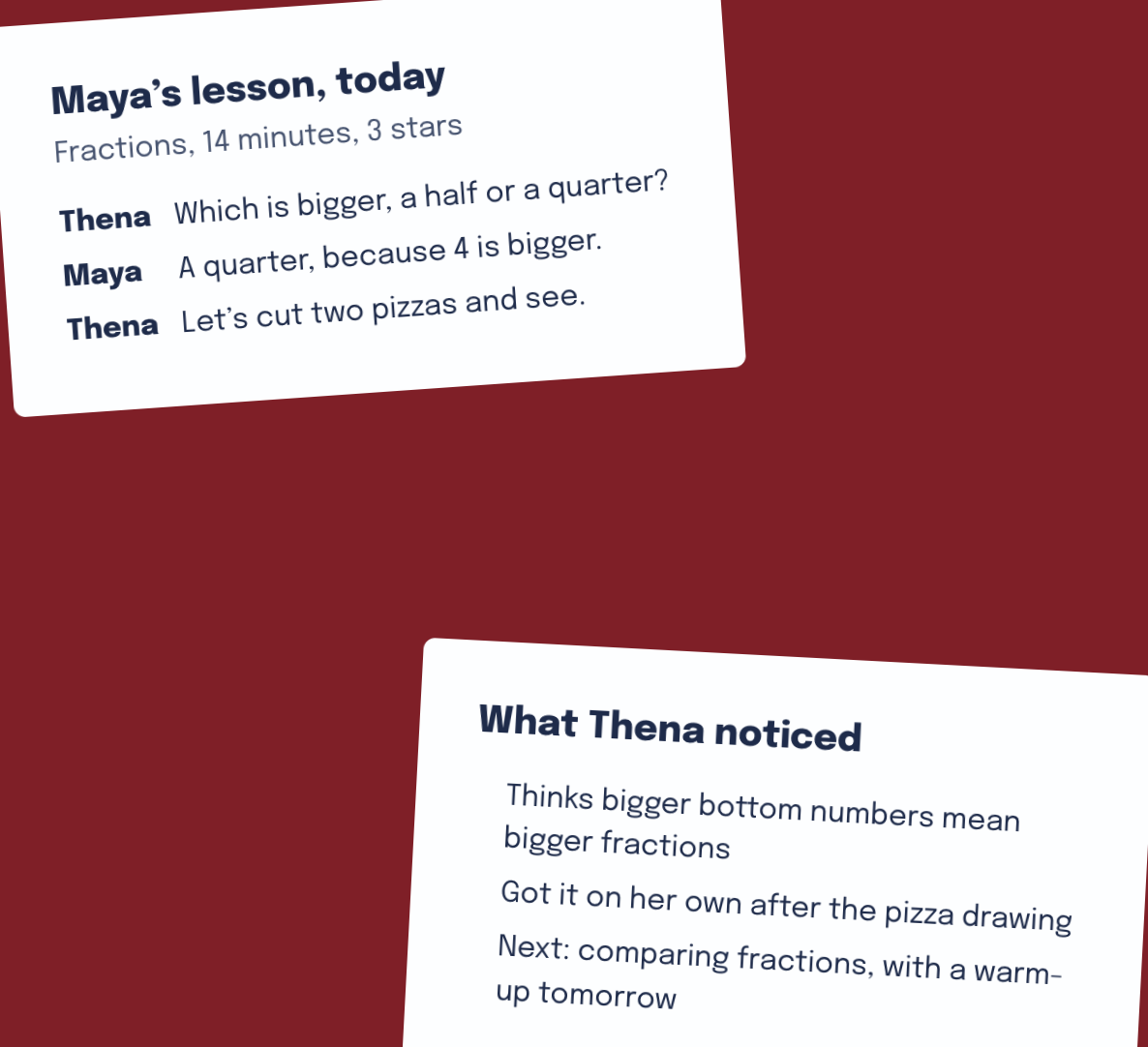
Every lesson is in your grown-ups area word for word: what Thena said and drew, and every answer your child gave. With each one come her notes on what they found tricky, which she uses to plan the next lesson.
A second AI checks every message. If something your child writes suggests they may need help, you get an email right away. A grown-up sets up every account, the grown-ups area asks for your password again after 15 minutes, and Thena only ever knows your child's month and year of birth. Read more about how we keep children safe.
What it costs
The first 3 lessons are free, for all your children, with no card needed.
After that, Solo is $39 a month for one child and 3 hours of lessons. A private tutor charges $35 to $60 for a single hour. Family is $59 a month for up to 3 children sharing 6 hours, each at their own level. Paying yearly costs $389 or $589. Replays and quizzes don't use up your hours, and you can cancel any time.
Lessons grow with your child, from about 12 minutes at age 5 to 30 minutes from age 11. So 3 hours is about 15 lessons a month for a 5-year-old, 10 for an 8-year-old and 6 for a 12-year-old.
Try her with tonight's homework
Add your children in two minutes and Thena finds where each of them is up to. Then ask her for whatever came home in the backpack, and sit with your child for the first lesson.
Questions parents ask
- Is Thena a real person?
- No. Thena is an AI, a computer program that teaches. She says so to children, never pretends to be a person, and a grown-up sets up every account.
- Which grades and subjects does Thena teach?
- From Pre-K to 10th grade, Thena teaches math, English, science and social studies, following Common Core and NGSS.
- Will Thena just do their homework?
- No. She gives the least help that gets them moving, a nudge and then a hint, and only after a few tries does she show the way, followed by a twin question to do alone.
- What if my child is ahead or behind?
- Each child has their own level in each subject. A short challenge game finds the starting point, and you can set it yourself, so a child can do math two years ahead and read at their own pace.
- How much screen time is it?
- Lessons grow with them, from about 10 minutes for the youngest to about 30 from age 11. Thena never starts the next lesson by herself, and nothing pings a child to come back.
Filed under Learning with AI, Home education